Feng Shui is a traditional cultural practice originating from ancient China. It emerged from the Yin-Yang school of thought and matured within Daoism, incorporating elements of Confucianism and Buddhism. Developed through centuries of practical application, it encompasses theories and techniques for selecting auspicious locations and avoiding inauspicious ones, exerting a profound influence on Chinese society. Today, many people in Western countries like the United States and the United Kingdom are also beginning to study Feng Shui principles. Today, let’s explore Feng Shui knowledge specifically related to home decoration…
Restaurant Feng Shui Knowledge
Dining room feng shui is a key factor in fostering harmony among family members. Good dining room feng shui not only strengthens family cohesion but also attracts wealth. By applying the feng shui principles we’ve outlined to arrange your dining space, you can promote family harmony and physical well-being.
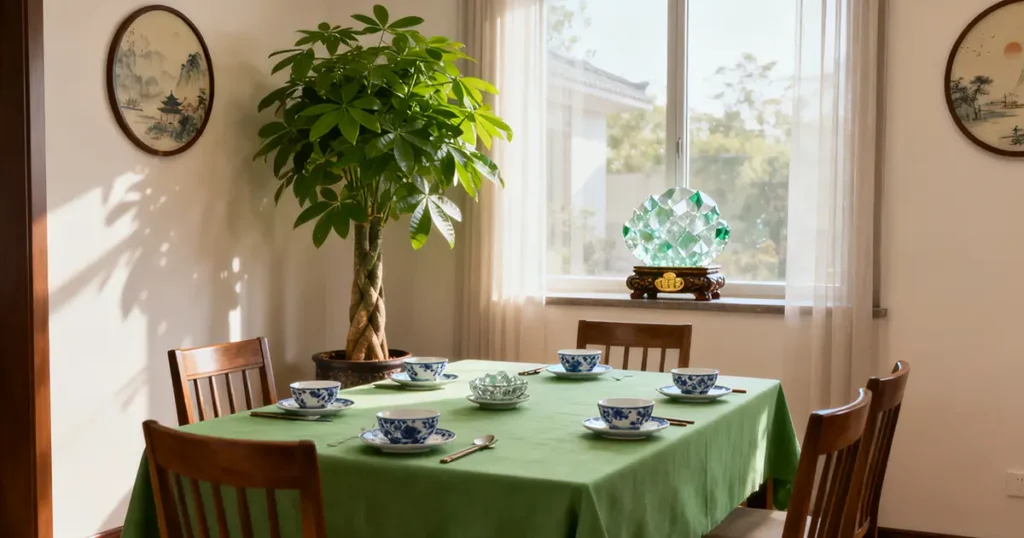
Tip 1: Layout
Like other rooms, the dining area should have a square or rectangular layout without any missing or protruding corners. Rectangular or square shapes are ideal.
Tip 2: Location
Position the dining area between the living room and kitchen, ideally at the center of the home. Avoid placing it directly below a bathroom on the floor above, as this suppresses the dining area’s positive energy.
Tip 3: Decor
As the dining area is where meals are consumed, it significantly impacts family wealth. Use bright colors and ample lighting to boost energy and accumulate yang energy. Placing plants here further enhances yang energy and prosperity.
Tip 4: Unfavorable Locations
While centered in the home, the dining area must not face the front or back doors. For example, in a duplex design, the dining area should be upstairs. Windows on the left and right walls should not directly oppose each other, and other structural issues should be avoided.
Tip 5: Ideal Dining Table Shape
The dining table should ideally be round or oval, avoiding sharp corners. This shape symbolizes family prosperity and unity. If using a square table, avoid sitting at the corners to prevent exposure to negative energy.
Tip 6: Lucky Numbers
The number of seats at the dining table also influences household fortune. Theoretically, six, eight, and nine are yang-aligned lucky numbers. While your regular dining group may be fixed, these numbers can guide how many guests to invite during banquets.
Tip 7: Auspicious Directions
Each family member should face one of the four auspicious directions corresponding to their personal gua when dining. Adjust the seat of the breadwinner to face the Vital Energy direction. The mother should face the Longevity direction, symbolizing family harmony. School-age children benefit from facing the Hidden Position direction to enhance academic fortune. Elders facing the Heavenly Doctor direction ensure lasting health.
Tip 8: Mirrors
Installing a mirror in the dining area to reflect the food on the table doubles the wealth. This is the only place in the home where a mirror reflecting food is permissible. Never hang mirrors in areas like the kitchen, as this invites accidents or fires.
Tip 9: Auspicious Decorations
The dining area is ideal for displaying the Three Immortals of Blessing, Prosperity, and Longevity, symbolizing wealth, health, and longevity. Oranges represent affluence, peaches signify longevity and health, while pomegranates denote numerous descendants.
Tip 10: Dining Utensils
Chinese tradition favors chopsticks and spoons for eating, avoiding sharp knives and forks to prevent negative energy.
Kitchen Feng Shui Knowledge
In terms of home feng shui, the kitchen’s feng shui importance ranks second only to that of the main entrance and bedroom. When kitchen feng shui is harmonious, health and wealth naturally follow. The most crucial aspects of a kitchen are ample lighting, good ventilation, maintaining cleanliness, and avoiding stagnant corners where negative energy accumulates.
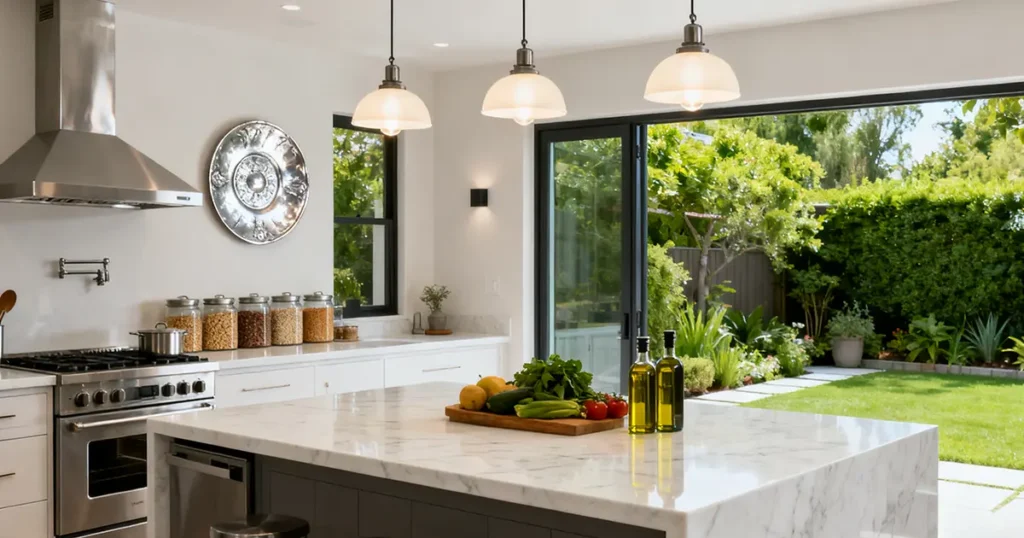
Tip 1: Avoid Direct Sightlines to the Stove Upon Entering the Kitchen
The stove is the source of daily meals for the household. Feng shui emphasizes that “food is fortune,” meaning the stove represents the family’s wealth. Stoves dislike drafts, as wind can extinguish flames and disperse wealth energy. Therefore, positioning the stove directly facing the entrance or with its back to a window is inadvisable, as it may lead to financial difficulties.
Tip 2: Kitchen Door Should Not Face the Main Entrance
The kitchen holds the household’s wealth, while the main entrance is the gateway for energy flow and the path for family and friends. When your main door directly faces the kitchen door, it exposes the kitchen to the outside world, draining away wealth energy and leading to financial hardship!
Tip 3: Kitchen Should Not Face the Bathroom
The kitchen is where food is prepared, while the bathroom harbors bacteria and impurities. If these spaces face each other, it compromises hygiene and jeopardizes your family’s health.
Tip 4: Avoid Open Spaces Behind the Stove
The dining area should be positioned centrally within the home but must not face the front or back doors. For example, in a duplex design, the dining area should be located upstairs. Avoid windows directly facing the dining room walls on either side, and prevent such layout issues.
Tip 5: Stove Should Not Be Placed Under a Beam
Beams overhead are considered inauspicious in any indoor space, and the stove area is no exception! A beam above the stove primarily affects your family’s health, especially the primary cook in your household.
Tip 6: Stoves should not be directly adjacent to sinks
Stoves are for fire and cooking, while sinks are for water and washing dishes. These two should not be connected; a countertop should separate them to prevent the clash of water and fire.
Tip 7: Kitchen users should not prepare food with their backs to the door.
Tip 8: Sharp utensils like knives and forks must be stored out of sight to prevent negative energy from causing harm.
Tip 9: White and green are suitable colors for the kitchen.
Tip 10: Never use damaged tableware or cookware.
Living Room Feng Shui Knowledge
Living room feng shui is the most crucial aspect of residential feng shui. The overall fortune of a household—whether it concerns career advancement, the ebb and flow of luck, family financial prosperity, the depth of marital bonds, children’s academic performance and exam fortunes, or the state of health—is largely determined by the feng shui of the living room. This clearly demonstrates that living room feng shui is the “core” of residential feng shui, its importance being truly unparalleled.
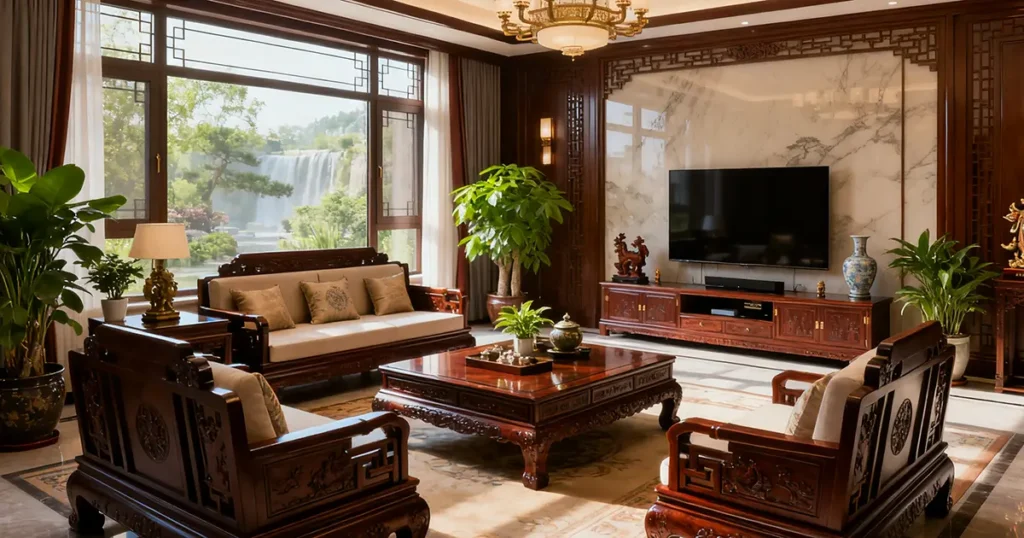
Tip 1: Location
The living room should ideally be situated in the front half of the home, near the main entrance, to directly absorb the energy entering through the door. If the living room is accessible only via a hallway, keep the hallway tidy and well-lit to prevent obstructing the flow of energy into the living room. In split-level homes, the living room should be located on the lower level.
Tip 2: Layout
The living room should ideally be square or rectangular. The seating area should not face sharp corners, and the sofa should not be positioned under a beam. If a protruding corner creates a “hidden arrow” effect, place a potted plant or furniture to neutralize it. For an L-shaped living room, use furniture to divide it into two square areas, treating them as separate rooms.
Tip 3: Adjust Decor
Sharp objects like swords, firearms, medals, or taxidermy should never be hung on walls. These items generate negative energy, potentially causing arguments or violent behavior. Similarly, avoid lamps or ornaments with sharp edges.
Tip 4: Feng Shui Arrangements
Living room arrangements primarily depend on residents’ lifestyles and aesthetic preferences. Consulting a professional feng shui master is advisable. Any feng shui talisman placement must align with the Eight Life Aspirations and the individual’s natal chart directions.
Tip 5: Color
The living room’s primary color is not the key feng shui factor. The most important elements are the layout and the energy balance achieved through the Five Elements’ interactions. For example:
– Southwest/Northeast: Yellow tones
– Southeast/East: Green tones
– North: Blue tones
– South: Red tones
– Northwest/West: White, silver, or gold tones
Tip 6: East, Green → Health Luck
The eastern sector governs residents’ health. Placing thriving plants here promotes family wellness and longevity.
Tip 7: West, Silver → Prosperity of Descendants
The west direction governs the fortune of descendants. Associated with the Metal element, it favors white, gold, and silver. Metal sculptures, hollow six-column metal wind chimes, televisions, and audio equipment are ideal for this area.
Tip 8: South, Red → Reputation
Proper feng shui in the south direction brings fame and recognition to the family, especially the breadwinner. The south direction belongs to the Fire element, favoring the color red. If a mirror must be placed here, use only a small one, as mirrors belong to the Water element—water extinguishes fire, which is detrimental to reputation luck.
Tip 9: North, Black and Blue → Career Luck
Check the arrangement in the north direction of the living room. The north represents career luck, belonging to the Water element, favoring blue or black. Placing water-related items here—such as fish tanks, landscape paintings, or water wheels—supports residents’ career advancement.
Tip 10: Northeast, Yellow → Academic Fortune
If children are preparing for exams, pay special attention to this area’s feng shui. This earth-element zone favors yellow and earth tones. Ceramic vases and other earth-related items enhance its energy.
Tip 11: Northwest, White → Academic Luck
Enhancing the energy in the northwest corner of your living room boosts your luck with benefactors and improves interpersonal relationships. This area belongs to the Metal element, making it ideal for displaying white, gold, or silver metal ornaments—such as metal sculptures or table lamps with white round shades on metal bases.
Tip 12: Southeast, Green → Wealth Luck
The southeast corner of the living room represents a family’s wealth position. Associated with the Wood element, its favored color is green. Placing wood-related items here attracts wealth, with round-leafed green plants being most effective. Never display dried flowers, as they carry excessive Yin energy. This area is also ideal for an aquarium, as water nourishes wood. Ensure the aquarium’s size complements the living room space—neither too large nor too small.
Tip 13: Southwest, Yellow → Romance Luck
To enhance marriage or love prospects, this living room direction is paramount. The southwest belongs to the Earth element, using the same activation methods as the northeast. Placing a pendant-style lamp here boosts energy and promotes marital harmony; natural crystals and family photos yield similar effects.
Tip 14: Avoid Darkness
Living room feng shui prioritizes ample sunlight and bright lighting. A well-lit space signifies thriving family fortune and smooth progress. Avoid overly dark color schemes, which may bring gloomy household energy. Limit tall, dense, or excessive potted plants on balconies to prevent light obstruction.
Tip 15: Avoid Uneven Floors
Bathrooms, being places for bodily functions, generate impure and damp energies. When directly opposite a bedroom door, they affect the room’s air quality, harming health!
Tip 16: Avoid Dining Area at Entrance
Seeing the dining area immediately upon entering not only encourages gluttony and limits ambition but also invites trouble from malicious individuals. It may even cause one to lose life goals and ideals.
Tip 17: Avoid Direct Paths Through Entrance or Bathroom Facing Entrance
A direct path through the entrance or a bathroom facing the entrance harms family wealth, causing money to flow in and out or leading to financial mismanagement. Use screens or cabinets to block the path, redirecting energy for prosperity.
Tip 18: Avoid Mirrors in Diagonal Corners
Mirrors in diagonal corners obstruct family fortune; leading to financial setbacks, losses, injuries, frequent accidents, loss of influential supporters, and missed opportunities.
Tip 19: Avoid Displaying Artificial Flowers and Plants Indoors
Some households decorate living rooms with numerous artificial flowers and plants. While visually appealing, these can attract significant romantic entanglements or marital issues for the homeowners. They may also create obstacles to marriage for unmarried family members; They may attract insincere relationships or encounters with unsuitable partners, potentially affecting family finances and causing poor investment decisions, leading to financial setbacks.
Tip 20: Avoid cluttering the living room with antiques, furniture, or miscellaneous items
A living room crammed with antiques, furniture, or clutter can adversely affect family health. It may obstruct the flow of qi and blood, leading to declining health, persistent setbacks, and overall well-being issues for household members.
Balcony Feng Shui Knowledge
Throughout history, balcony feng shui has been of paramount importance to the entire home. As seen on television, many homes use glass doors to separate the balcony, making it more directly influenced by external feng shui formations. Therefore, compared to other spaces, the feng shui of the balcony deserves even greater attention.
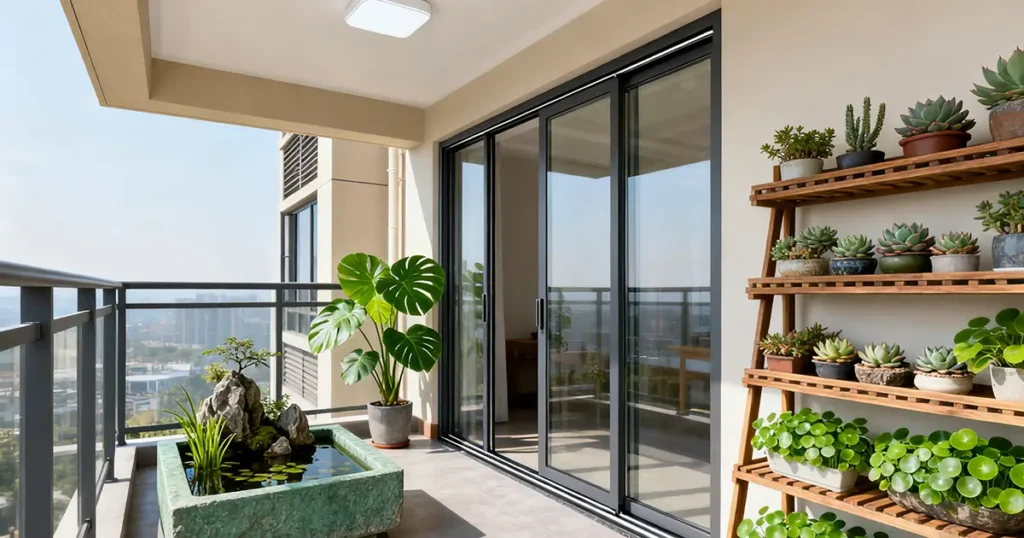
Tip 1: Avoid Balconies Facing Heavenly Sword Sha
Heavenly Sword Sha refers to a narrow gap between two high-rise buildings, resembling a sword slicing the sky in two. If a home faces this formation, it often brings bloodshed and financial ruin.
Tip 2: Avoid Balconies Facing Directly Opposite Roads
If a building sits at a street corner where a road charges straight toward the balcony, it resembles a beast charging head-on—a highly inauspicious feng shui configuration that brings financial ruin. Moreover, this layout exposes residents to constant noise and fast-moving traffic from the road, disrupting peaceful life energy and adversely affecting household harmony and health.
Tip 3: Balconies Should Not Face Reverse-Bow Roads
Due to terrain and layout, road designs inevitably include curves and straights. If the road ahead curves with its bend pointing directly at the balcony—resembling a bow drawn to shoot at the home—this is a reverse-bow street configuration. This is an inauspicious feng shui pattern, signifying financial loss.
Tip 4: Balconies Should Not Face Overly Imposing Structures
Imposing buildings possess a powerful energy field. While stable in themselves, they exert pressure on the surrounding environment. A balcony facing such a structure will absorb this pressure, adversely affecting the home’s feng shui.
Tip 5: Balconies Should Not Face Sawtooth-Shaped Buildings
Sawtooth-shaped buildings typically feature large bay windows with numerous sharp corners on their facades, resembling a row of pointed teeth. A balcony facing such structures feels like confronting a fierce beast, often leading to feng shui hazards.
Tip 6: Balconies Should Not Face Buildings with Heavy Yin Energy
Certain structures carry heavy Yin energy, such as temples, Taoist shrines, hospitals, funeral homes, and cemeteries, which can negatively impact surrounding feng shui. If these buildings directly face a balcony, they may adversely affect the family’s financial fortune.
Tip 7: Avoid Balconies Facing Pointed Angles
A balcony facing pointed angles refers to one directly opposite sharp corners of adjacent buildings. The more pointed and closer these angles are, the more detrimental they become to the household’s fortune.
Tip 8: Avoid Balconies Directly Opposite the Main Door
A balcony directly facing the main entrance creates a “piercing heart” configuration in feng shui. This alignment not only compromises family privacy but also hinders wealth accumulation, adversely affecting the household’s financial fortune.
Tip 9: Avoid Balconies Directly Opposite Kitchens
A balcony facing the kitchen also forms a “piercing heart” pattern in feng shui. This configuration not only impedes wealth accumulation but may also negatively impact the health of household members.
Bedroom Feng Shui Knowledge
We spend nearly one-third of our lives in the bedroom. It serves as our final sanctuary and daily recharge station. The environment within this space directly impacts our rest and sleep quality. Thus, the feng shui of our bedroom profoundly influences whether we maintain vibrant energy and a radiant complexion. The principles of bedroom feng shui are truly a science in themselves…
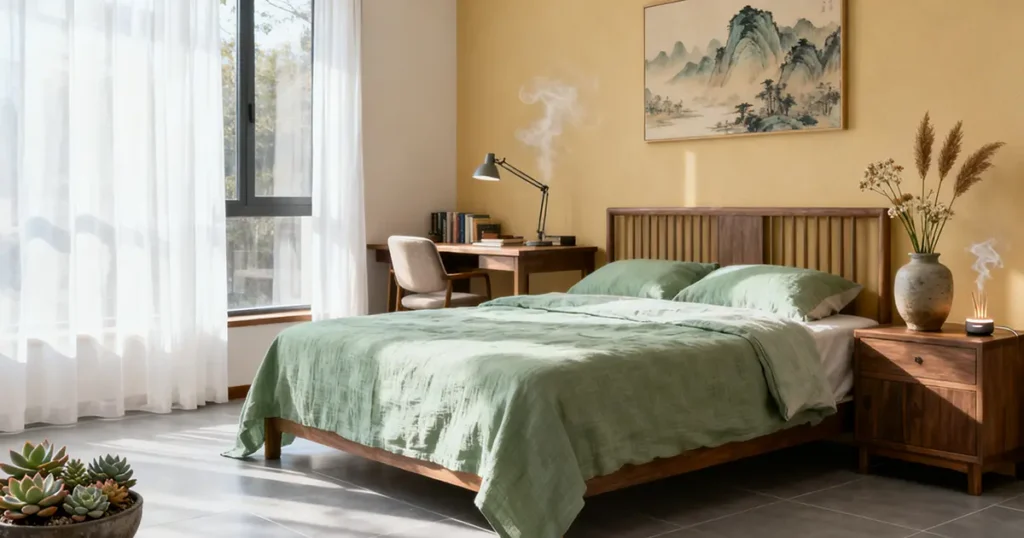
Tip 1: Soft Furnishings in the Bedroom
If you enjoy decorating your space with artwork, opt for images that reflect your ideal lifestyle. Characters like Lin Daiyu, who embody sadness and loneliness, are unsuitable for home decor as they may make your emotional life feel colder. Instead, choose pieces like happy couple portraits or vibrant floral patterns—these are perfect for the bedroom.
Tip 2: Unsuitable Room Arrangements
The bedroom represents your romantic life. While parents are cherished, their photos should not appear here—nor should children’s toys. Additionally, avoid placing televisions, audio-visual players, or other electronics in the bedroom. Beyond radiation and mental distraction, excessive electronics disrupt the bedroom’s feng shui energy.
Tip 3: Bedding Feng Shui Considerations
Ensure easy access to the bed from both sides, symbolizing equal energy between partners and preventing sleep disturbances. Place a nightstand on each side of the bedhead; avoid positioning the foot of the bed directly opposite the door. Use pairs of cushions and pillows to maintain harmony. Feng shui also suggests that for singles, a standard-sized bed is preferable to an oversized one. If bed size cannot be altered, sleep on patterned bedding to transform your emotional state.
Tip 4: Avoid Mirrors Facing the Bed
Beyond affecting health and romantic relationships, mirrors can disrupt wealth and fertility. Never place a mirror at the foot of the bed—it acts like a “soul-capturing mirror,” causing unease for occupants. If mirrors must be installed in the bedroom, position them in discreet locations.
Tip 5: Avoid Placing the Headboard Against the Stove
If the bedroom adjoins the kitchen, avoid positioning the headboard directly against the stove wall. The kitchen represents “fire,” which can lead to illness, nervous tension, or irritability for those residing in the bedroom.
Tip 6: Avoid placing the bed under beams
The bed should not be positioned beneath ceiling cabinets, beams, or light fixtures. Doing so may cause headaches, joint pain, or damage one’s reputation.
Tip 7: Avoid positioning the bedhead directly opposite the door
If the bedhead faces the main entrance or bedroom door, this is known in feng shui as “door clash.” It disturbs sleep, leading to nightmares or hallucinations.
Tip 8: Avoid gaps behind the headboard
The headboard must be flush against a solid wall or object—no gaps. This feng shui principle is called “relying on a mountain.” Otherwise, it may cause illusions, pessimism, and in severe cases, schizophrenia.
Tip 9: Keep Bathroom Door Closed in Bedroom
For bathrooms within the bedroom, the door should remain closed or be screened off. Otherwise, it may invite extramarital affairs—known as “floating peach blossom” in feng shui—and lead to financial leakage.
Tip 10: Enclose the bed with curtains or a screen, or drape fabric or a mosquito net around its perimeter. This Peach Blossom arrangement will make your affection surge like an unstoppable tidal wave!
Tip 11: Keep red or pink fish in a corner of your bedroom. These fish swimming before your eyes daily will act as catalysts to ignite mutual desire.
Tip 12: Avoid positioning the bedhead facing corridors, elevator shafts, stairwells, toilet drainpipes, or flush toilets. These areas represent dynamic yang energy. Corridors, drainpipes, elevator shafts, staircases, and flush toilets all harbor highly unstable air currents. Even through walls, these disturbances can affect brainwaves, preventing peaceful sleep.
Tip 13: Never position the headboard directly beneath a window. Windows are areas of intense airflow and light, creating significant disturbance that greatly impacts sleep. This can cause the body’s energy to dissipate, posing a serious threat to health. If relocating the bed is impossible, use thick curtains with blackout lining to block the light. However, this is only a second-best solution—the ideal approach remains repositioning the bed.